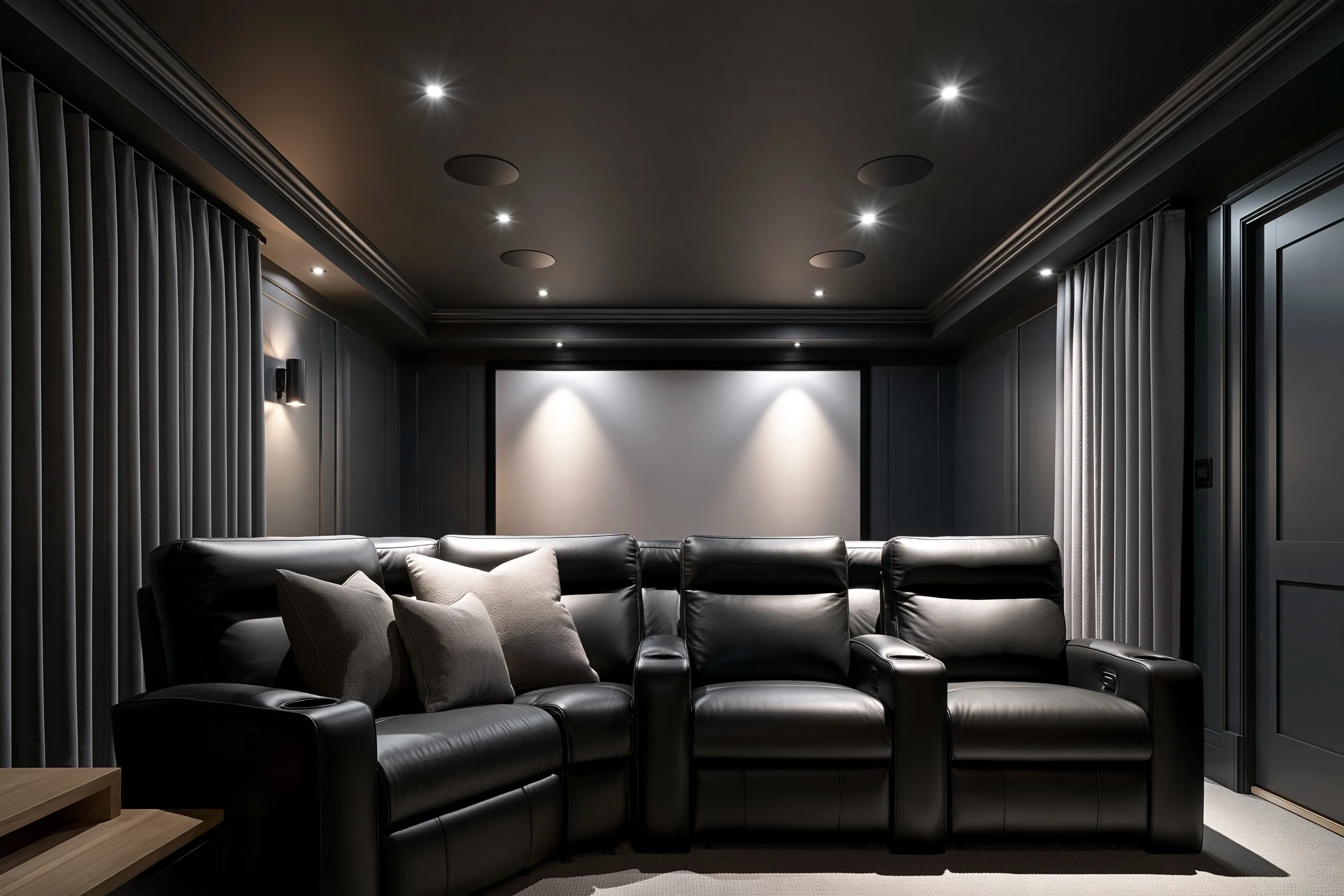
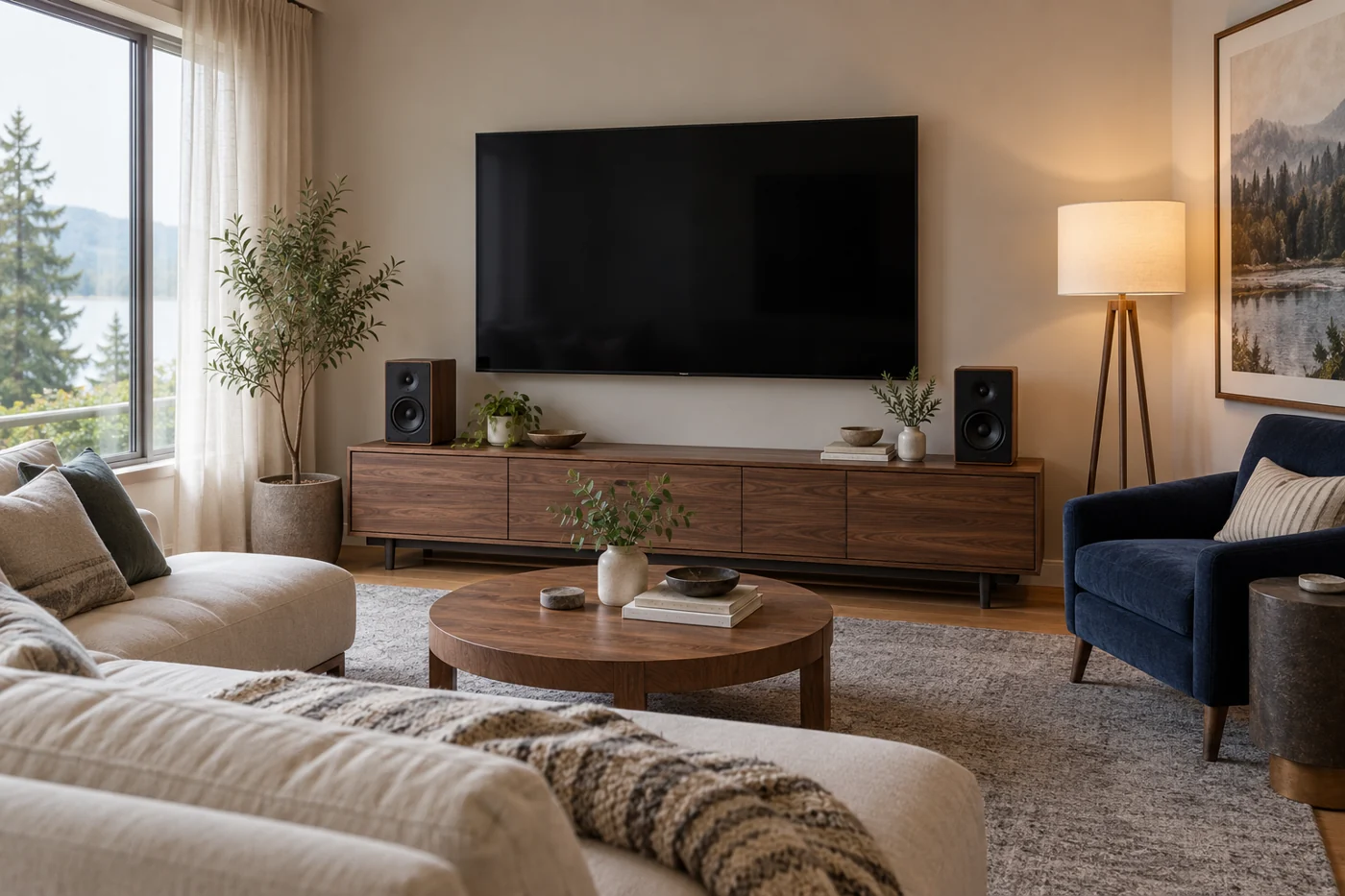
A wall-mounted TV with better sound may need only small changes; a dedicated movie room can mean new wiring, mounting support or building work. For Tukwila homes, we plan and install both kinds of job at Renton Home Theaters, from living-room media systems to dedicated theaters, projectors and surround sound. Start with who will use the space, what they’ll watch and which seats need a clear view. Then we match systems to those needs, and we treat any room changes and the equipment installation as one job.
1960s house in Tukwila with an attic above the media room
Original request
Overhead sound for Atmos movies, using the 5.1 system already in the room
Speakers
Four flush round speakers in the ceiling, two in front of the seats and two behind
Receiver
Already able to play Atmos, so it stays
Cables
Run through the attic, with no wall patching
Cost
$2,900
In this example, the owners of a 1960s house in Tukwila have a 5.1 system in their media room and a receiver that can already play Atmos. They want the rain and helicopters in films to sound overhead, without replacing anything.
Tukwila’s Permit Center deals with residential remodels and additions, and it has information on electrical permits too. For a remodel, the city treats architectural or structural plans separately from any other permits the job may need. For a home theater, what counts is describing the real changes: a new partition, changed mounting support, new outlets or other work on the room. Ask the Permit Center which route fits. Don’t assume a simple AV installation needs every document a large remodel does. Our quote for the electronics won’t ignore room work the job needs. We go over with you who handles each application, trade and inspection.
Decide what kind of room you want
Start with the room where you want to watch and listen. Say whether it stays an everyday living space or becomes a dedicated theater, and what equipment is already there. Mounting one screen is a very different job from a room with surround speakers, hidden wiring and programmed controls. Write down what you expect at the end, including how everyone will switch between TV, streaming and games. That gives us a clear job to price. If building work is planned too, put it on the same room drawing, so we place the equipment with the doors, the furniture and the work needed to install it in view.
Fit the system to the room you have
Dedicated home theater rooms
For a dedicated theater, we draw the seats and the paths through the room before choosing a screen size. The door still has to work with everyone seated, and the screen position has to work for the seats you plan. We decide where the equipment sits and how we’ll reach it without taking the room apart, with air flow and cable access in mind. If a wall or ceiling is changing, that goes in the room-work plan. Then our AV quote is based on the mounting and cable routes you’ll really have, without counting on building work no other trade has agreed to do.
Living-room media systems
A living-room system shares the space with the rest of daily life. Take photos of the room with its usual furniture, and we’ll check the new display from the seats people really use. Windows, glare and walkways can make a bigger screen or an extra speaker more trouble than it’s worth. We weigh a soundbar against separate speakers for your space and what you want to hear. Decide how much cable and equipment you’re happy to see before we talk about hiding it. In a finished room, we explain the access and repair work that look needs, and any limits the walls put on it.
Projector and screen installation
The projector, the screen and the mounting spot all have to work together. We measure the distance available, note the picture size you want and where the seats are, then check the exact equipment against that plan. The light reaching the screen and the screen surface matter too. A ceiling install needs a solid mount, power and a cable route; an ultra-short-throw projector has its own placement and screen needs. We price that work along with the projector and screen. We state what we supply and which of your furniture or walls the setup relies on.
Surround sound and Dolby Atmos
We work out the listening area before deciding how many speakers you need. The center, front, surround and subwoofer all need spots that suit the seats and still leave the room usable. For Dolby Atmos, we confirm the equipment is compatible and choose how to add height, with ceiling speakers or upward-firing ones. A finished ceiling can limit the options and add to the work. We mark each speaker’s real position and name the receiver we’ll use. You can then check the sound plan against the room drawing before you commit.
Theater wiring and prewiring
We mark every display, speaker and equipment spot, then work out how the signal cables reach them and how they could be swapped later where we can. We list power work on its own, since it’s a separate trade. If a route crosses a finished wall or ceiling, we explain the openings and how we put the wall back. In a remodel, we decide the routes with you before the walls close. Read about both under theater wiring and prewiring. We work from one route plan, and whoever does the room work should have the same one, so both quotes describe the same job.
System upgrades, setup and controls
An upgrade can start with the equipment you already own. Send the model numbers and what you want to work better, such as switching inputs or hearing voices clearly. Before replacing a single part, we check that your receiver, display and cables can handle the change. The controls should make everyday use simple for everyone at home. We decide with you which sources the remote runs, and our setup includes testing your usual TV and gaming routines. Programming and showing you how it works are part of the job we price, so they don’t get lost behind a list of products.
Home theater acoustic treatment
Describe how the room sounds before we choose any treatment. Muddy voices, harsh echoes or bass that changes from seat to seat each lead to different fixes. We consider speaker placement and furnishings alongside acoustic panels. Decorative panels alone don’t stop sound reaching the rest of the house. If you want less noise in the rooms next door, that’s a building conversation of its own. Our home theater acoustic treatment service is about the sound inside the room. In a remodel, raise it while the room work is still being planned, so any building changes are weighed with the rest of the job.
Price the equipment and the installation side by side
We price from one room drawing and one set of equipment choices. Our quote shows the display or projector, speakers and controls, then the mounting, wiring, power work and wall repairs. We list setup, testing and a walkthrough of the everyday controls too. If the room needs changes, we say who does that work and how it fits the city’s review. We show anything we can’t see yet as an allowance or an item waiting to be checked. A cheap equipment price can mean less installation work, and a big room quote can leave out the AV setup. With every task on its own line, you can see what each costs and choose what belongs in the first stage.
If your home is in Kent, see home theater planning in Kent before you send details. In Kent, electrical permits and inspections go through Washington L&I, so the permit side works differently.
Questions about home theaters
Do I need permits for a home theater in Tukwila?
It depends on what you’re changing. Hooking up AV equipment and changing the room are different jobs. Describe new circuits, wall or structural changes and mounting work exactly to the Permit Center, and they can tell you which approvals apply.
How do I choose between a TV and a projector?
The room’s light, the places a screen or projector could go and your usual seats decide it. A projector needs the picture size, its exact position and the screen surface to match. A TV can be the practical choice for a shared living room. We also look at cable and power access as well as the picture, so the equipment can go in the way it should.
Will my old speakers and wiring still work?
Possibly. Include model numbers, photos of the connections and anything you know about where the cables run. We check their condition and whether they work with the new system. If some wiring can’t be reached until work starts, our quote says so. Seeing speakers or wall sockets in the room doesn’t mean they can be reused. We confirm that first.
Can panels stop sound reaching the rest of the house?
Not really. Panels mainly tame echoes inside the room. Sound reaching another room travels through the structure and its openings, and that needs its own look. Say where quiet matters and whether any building work is planned. Then we can describe and price the treatment and any sound-blocking work separately, since they do different jobs.
Request a free home theater quote
Photos of the room, its dimensions and where you want the seats are a good start. List the equipment you have and the display, surround sound or control changes you want. Mention any planned room work and whether we can get to the cable routes, and we’ll let you know if we’re available. Send your project details using the form below. Or call (425) 873-8868.