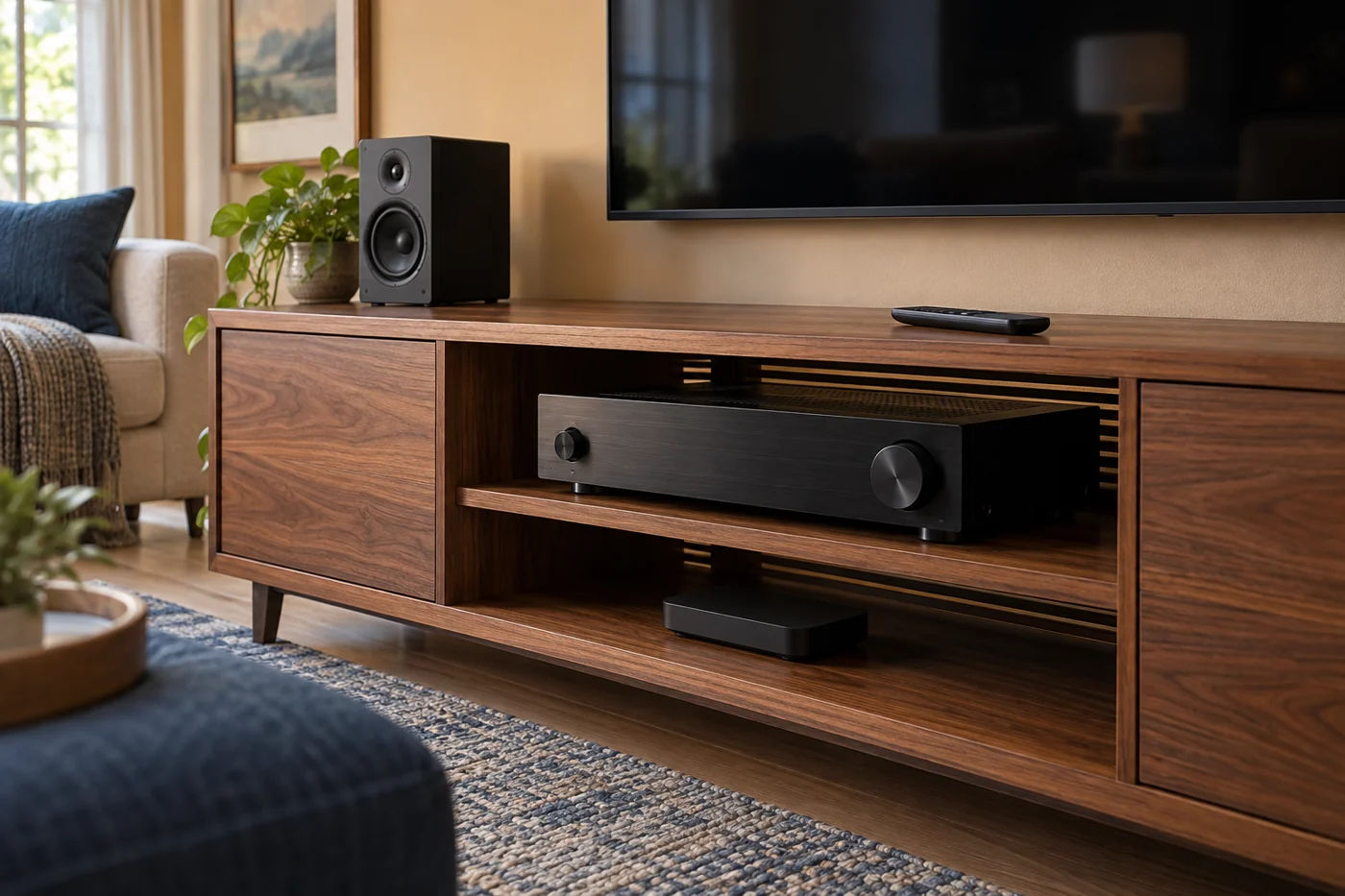
Renton Home Theaters organizes home theater wiring and prewiring around the planned equipment and room layout in Renton, Washington. We start with where the screen, speakers and sources will go, then define how their connections reach each other. Open-wall preparation and cabling through a finished room belong to the same installation plan but can require very different access work.
For a home in Newcastle, Tukwila or Kent, include the address so project availability can be confirmed. Flag shared walls or building approval requirements when describing a condo or townhome.
The available access changes how cable routes can be installed and concealed. Distinguish open-wall preparation, finished-room work and provisions for later replacement in the request.
Prewiring while walls and ceilings are open
A remodel or new room provides an opportunity to coordinate display connections, speaker cable and the equipment location before finishes close the routes. Settle the intended seating and speaker arrangement early enough to avoid wiring to positions that later become unusable. Mark connection points and identify which devices need separate power. Low-voltage AV cabling and electrical work should be clearly distinguished in the proposal and coordinated by the relevant trades.
Concealed wiring in a finished room
An attic, basement or existing opening may offer a route, while other areas may require surface access or repairs. Show the installer both the desired equipment position and the surrounding rooms so concealment can be assessed realistically. Ask which openings, patching and decoration are included. A request to hide every cable is not a complete scope until the available route and the work needed to use it have been established.
Accessible routes for later equipment changes
A planned route for cable replacement can be useful where display or source equipment may change. Discuss where accessible conduit or another practical route belongs, without assuming that spare space guarantees compatibility with every future product. Preserve access to connection points and document the completed runs. Clear identification helps distinguish speaker connections, display links and unused provisions when an upgrade is considered later.
Plan the equipment position before pulling cable
A receiver and source devices need a location with access, ventilation and a workable path to the display and speakers. Moving the equipment into a cabinet or adjoining space changes those routes and may affect control operation. Confirm which connections the selected products require and the proposed cable suitability for each run. A cable that physically reaches is not the same as a verified connection for the required signal; the completed installation should be checked with the actual equipment.
Define installation, repairs and handover separately
For a useful estimate, provide a room sketch, equipment list and photographs of accessible ceiling or underfloor areas where available. State whether finishes are open, complete or scheduled for renovation. Ask the proposal to identify cable runs, terminations, mounting points, separate power work and any making good. Include testing and a simple record of the connections in the requested handover. Whole-home networking, security wiring and unrelated automation are outside this focused theater-cabling scope.
Discuss your home theater wiring and prewiring project
Prepare the project address, photographs and the choices you are considering for your quote request. Include anything already installed or purchased so the starting point is clear.